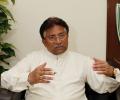
'In my tenure as a military chief and president of the country, we were succeeding. We were able to bring India to the negotiating table,' he said.
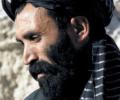
Top Taliban leader Mullah Omar was sheltered by Pakistan's powerful spy agency Inter-Services intelligence after the outfit's leadership fled from Afghanistan in 2001, according to an email received by former secretary of state Hillary Clinton during her tenure.
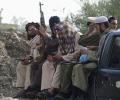
Pakistani Taliban has warned that the next few days and weeks would be "disastrous" for the country as the banned outfit vowed to "teach" the government and its security agencies a lesson over the killing of its leader Hakimullah Mehsud in a US drone strike.

Media reports also cited the US aid restrictions over the F-16 fighter jets deal between the two countries.

At least 54 suspected militants belonging to a pro-Taliban outfit, including its spokesman, were killed on Wednesday when Pakistani fighter jets pounded their hideouts and troops clashed with the insurgents in the volatile northwest tribal region near the Afghan border.
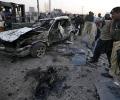
At least nine people, including six Afghan security officials, were killed and 19 others injured on Friday when a suicide bomber blew himself up at a check post on the Pakistan-Afghanistan border in the troubled Balochistan province.

Pakistan's hawkish Army chief Gen Ashfaq Parvez Kayani, who did little to change the force's India-centric stance, will leave the world's sixth-largest army grappling with a host of security challenges when he steps down on Friday.
Suicide bombers on Friday struck Pakistan's powerful Inter Services Intelligence, hitting its operational headquarters in the north-western city of Peshawar, and a nearby police station in Bannu, killing 20 people, including seven personnel of the spy agency. The strike on the spy agency and the police station left 85 people injured and came as 30,000 troops intensified their operation against the Taliban and foreign militants in lawless Waziristan.

Two suspected operatives of Al Qaeda have been arrested in New Delhi and Odisha and Delhi Police on Wednesday claimed to have busted a module of the terror group's Indian sub-continent wing operating out of the country.
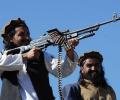
Amid accusations by Pakistan that America deliberately sabotaged peace talks by killing Taliban chief Hakimullah Mehsud, the Unites States on Sunday said the militant group has a "symbiotic relationship" with the Al Qaeda and provided "safe haven" to terrorists.

Both Messrs Imran Khan and Tahirul Qadri claim to march independently, but most of Pakistan believes they are marching to the Army's tune
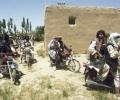
With hardline commander Mullah Fazlullah at its helm, the Pakistani Taliban has vowed to launch a wave of revenge attacks and ruled out talks with the government.

Women came out in large numbers to vote on Wednesday despite terror attacks and repeated threats.

A grieving Pakistan's policy shift towards the Taliban has comes at a great cost, says Shahzad Raza.
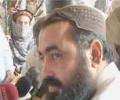
Pakistan's most wanted terrorist Baitullah Mehsud's death may actually embolden the Pakistanis as it marks a weakening of those Taliban factions that oppose Islamabad, a leading United States private intelligence agency has said. "With more confidence in its influence over the remaining Taliban elements, Pakistan could be even less willing to sell out its Taliban assets in Afghanistan," the Stratfor said.

Lieutenant General Faiz Hameed, who has been replaced as ISI chief, will remain in the forefront of Pakistani initiatives in Afghanistan as also in the peace talks with the Tehrik e Taliban, Pakistan. He will also get a year plus to serve in a corps command, remaining in the race for selection as the next army chief when General Bajwa retires in November 2022, explains Rana Banerji, who headed the Pakistan desk at the Research and Analysis Wing.
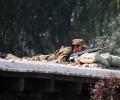
Pakistan faces a challenge largely of its own creation and only political processes can correct it, argues Raza Rumi.

ISI chief Faiz Hameed coerced the Taliban to announce an interim government guaranteed to preserve Pakistan's control over the levers of power in Kabul, observes Ambassador M K Bhadrakumar.

The United States drone attack that killed Pakistani Taliban chief Hakimullah Mehsud has done "serious damage" to the Islamabad's efforts for a dialogue with militants, Prime Minister Nawaz Sharif said on Tuesday.

David Coleman Headley pens down his life as a terrorist and his turn towards extremism in his new memoir.

Central Intelligence Agency chief John Brennan flew to Pakistan last week for a clandestine meeting with army chief Gen Raheel Sharif to discuss a possible military operation against militants in the country's northwest, a media report said on Monday.
India should adopt a pro-active strategy on Pakistan -- catalysing, facilitating and making room for a change in its anti-India posture.

'Omar Khorsani has called repeatedly for the most barbaric of attacks. He is very adept on social media. He is, in other words, eerily similar to the ISIS leader Baghdadi.' 'The crux of the army's 'strategic asset' policy -- its policy of regarding militants as those that can help Pakistan pursue its regional interests -- is that Pakistan needs help in weakening India or in keeping its presence minimal in the region.' Michael Kugelman reveals what the world can expect next from the Tehreek-e-Taliban Pakistan, the terrorists responsible for the Peshawar school massacre.
'Three security challenges could emerge shortly. The possibility (almost bordering on certainty) is as certain as the fact that night follows day: A terrorist attack by a Pakistan-based group. Chinese intrusion on the border.Communal tension/riots.' Colonel Anil A Athale (retd) explains what the Modi Sarkar needs to be prepared for.

After weighing all the costs and benefits, the next administration is likely to reduce and restructure assistance to Pakistan but not to end it altogether, says Daniel S Markey.

The year 2014 is coming to an end. It was the year of conflict, the year of strife. Year 2014 will be remembered for several reasons -- the rise and threat of the Islamic State, the downing of two Malayasia Airlines aircraft and the sudden and effective way of using hastags on social media to generate a buzz about the event. After all, who can forget #theicebucket challenge and the phenomenon it grew into. Read on as we bring you an overview of international news and events of 2014.
 © 2026 Rediff.com - Advertise with us - Disclaimer - Privacy Policy - Sitemap - Feedback - About us - Terms of use - Grievances